01
Pre-discharge discussion
Clarifying timing, home circumstances, daily assistance needs and who is involved in the transition.
Discharge can bring new routines, equipment and disability-related support needs. AMA helps participants put agreed daily living supports into practice at home.
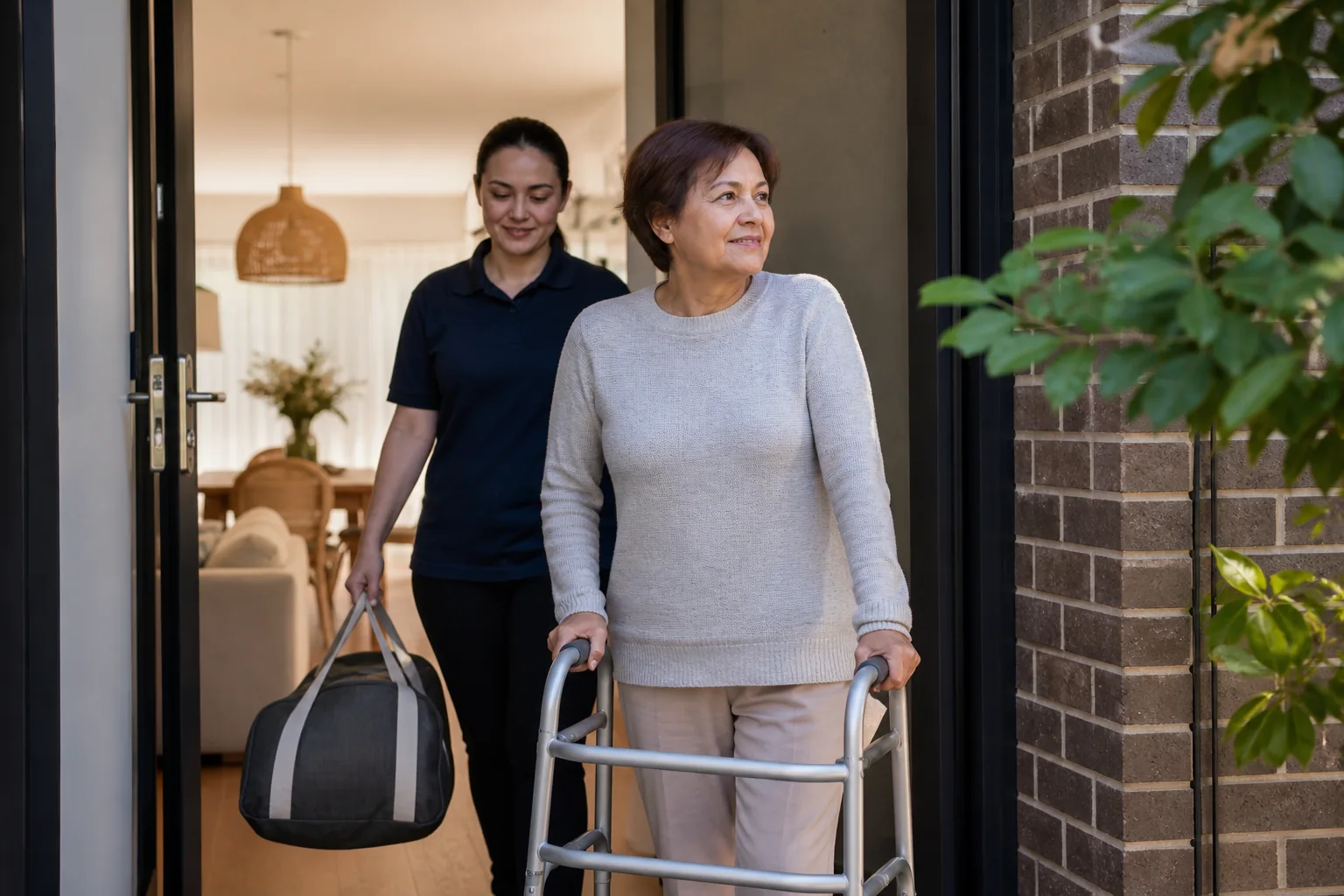
The pathway is shaped around the discharge plan, participant goals, available funding and the distinct roles of disability, clinical and allied health teams.
Clarifying timing, home circumstances, daily assistance needs and who is involved in the transition.
Practical assistance with personal routines, meals, mobility and settling back into the home environment.
Disability-related assistance that follows agreed restrictions and professional guidance within AMA’s support role.
Supporting everyday tasks and allied health recommendations where these are appropriate to the participant’s support plan.
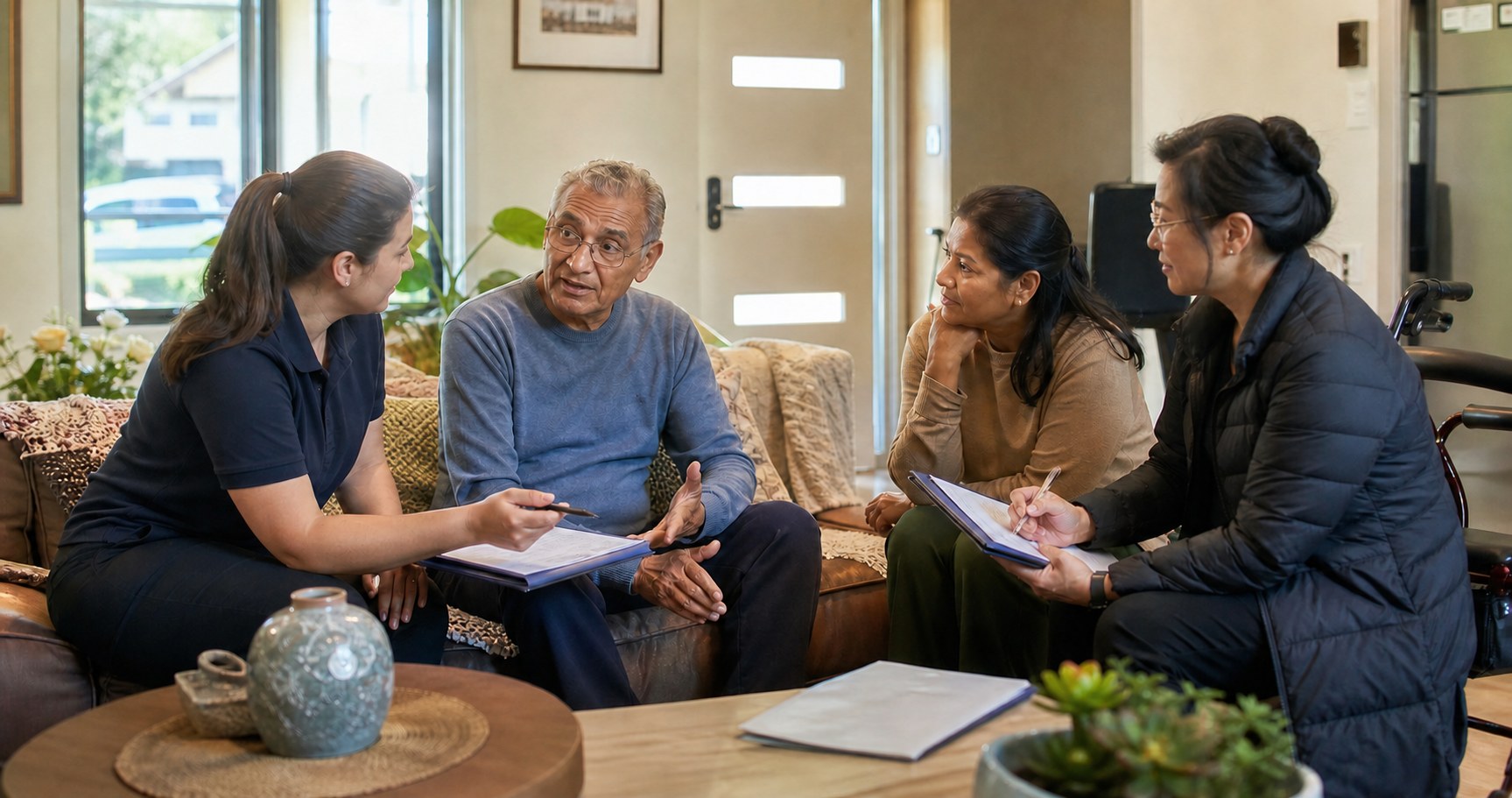
The first days at home can feel uncertain. AMA brings patience, clear explanations and reliable daily support while new routines take shape.
Timing, home access, equipment, daily support and key contacts are clarified before commencement.
Workers check what feels comfortable, allow time for choices and do not take over tasks the participant wants to do.
With consent or lawful authority, supporters and professionals understand AMA’s role and the next step.
Clear service boundary: AMA provides disability-related daily living support where it aligns with the participant’s plan. Medical treatment, rehabilitation and post-operative clinical care remain with qualified health professionals.
Tell us the expected discharge date, urgency and immediate support requirements.
We assess service fit, clarify roles and review the information needed for safe support.
Agreed assistance begins at home, with communication and review as routines develop.
Contact AMA as early as possible so timing, scope and service availability can be discussed.