01
For children
Activities are adjusted to the child’s communication, interests, pace and current participation.
DPLAN connects functional literacy, numeracy and communication with purposeful activities. Facilitators draw on relevant university study and backgrounds in education, social work or psychology.
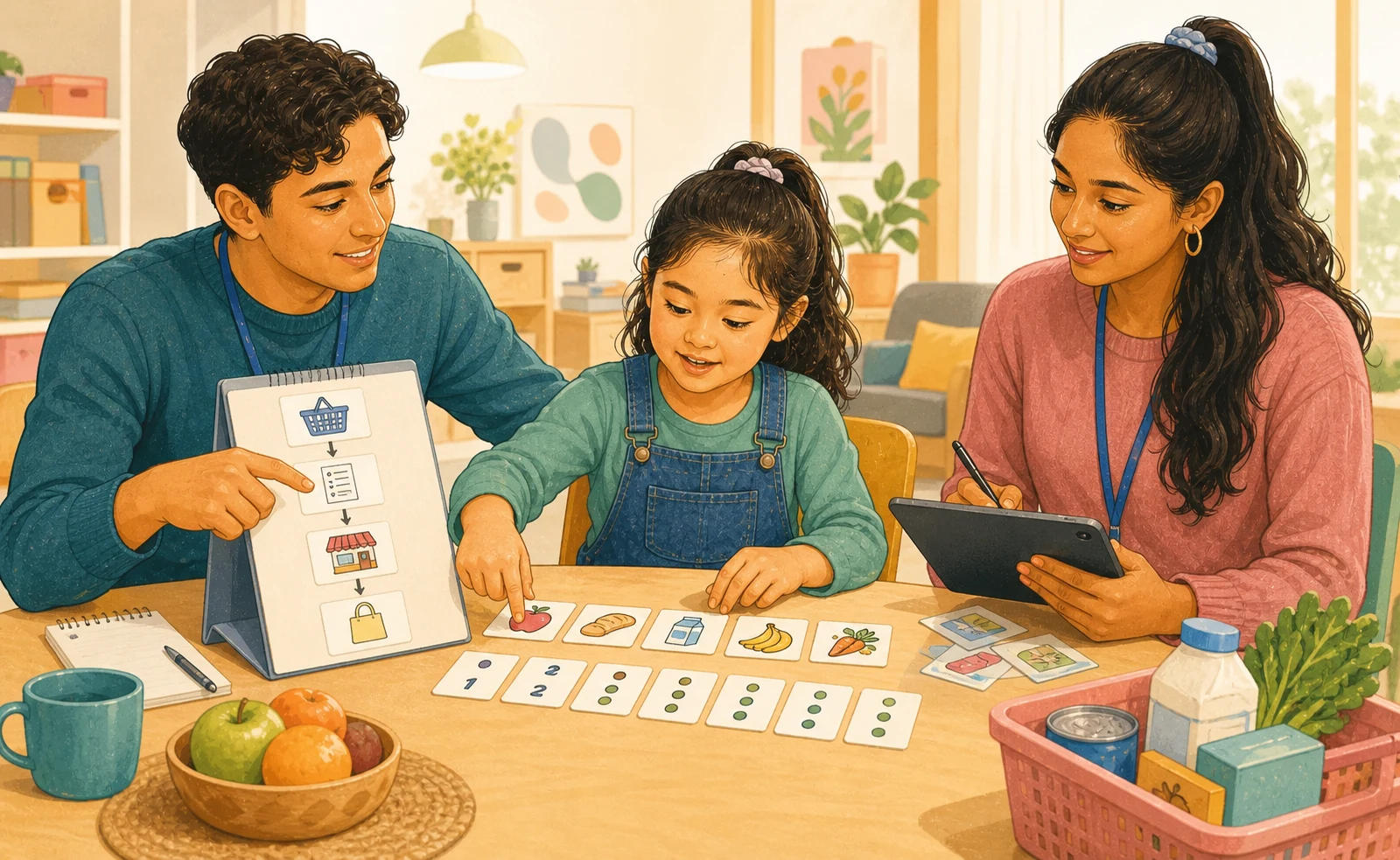
DPLAN may suit children whose disability-related goals include functional literacy, numeracy, communication and participation through meaningful activities.
Activities are adjusted to the child’s communication, interests, pace and current participation.
Families can share useful everyday goals and what motivates the child, while the child’s choices remain central.
Facilitators draw on relevant study or backgrounds in education, social work or psychology when planning activities and observing participation.
DPLAN does not replace school teaching, tutoring, educational assessment or specialist therapy. Suitability and funding are reviewed individually.
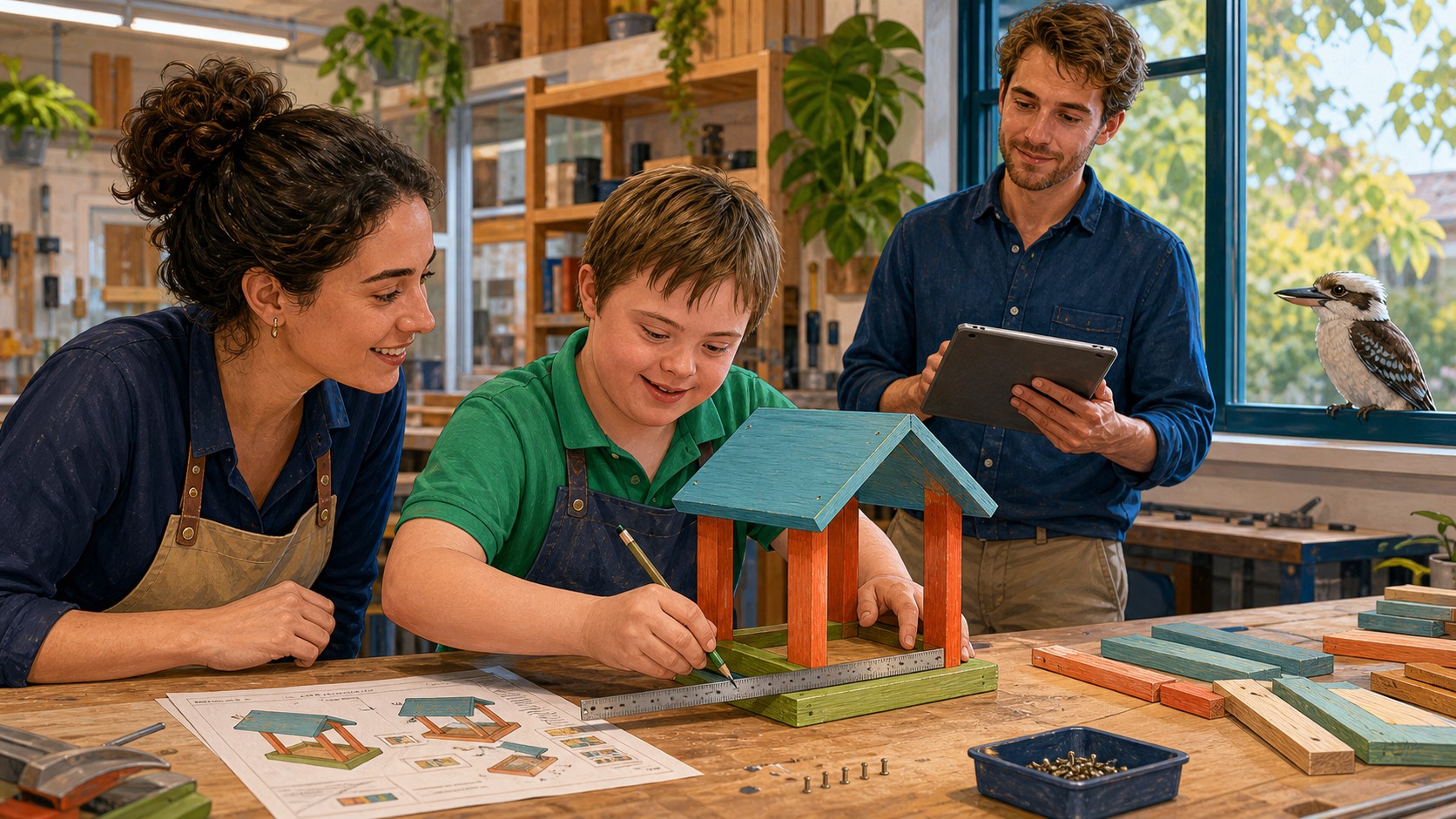
Children use reading, numbers, communication and problem-solving in an engaging project suited to their age and interests.

Pictures, useful words and simple steps connected to the activity.

Quantities, time, matching and simple money concepts.

Asking, choosing and sharing information during the task.

Achievable steps that make progress visible and worth celebrating.
A child can pause, choose between activities and communicate in their own way. Staff notice uncertainty, protect dignity and celebrate progress without turning every moment into a test.
Families can ask questions first without committing to the program.
Tell us about practical skills, interests, communication and areas where support may help.
We consider group suitability, support needs, funding, schedule and current availability.
If DPLAN is suitable, we clarify goals, routines, communication and progress observations.
Ask about program fit, current availability and the next intake conversation.