01
You are not fitted into a service
We begin with routines, goals, communication, risks and what needs to change—then discuss the most relevant pathway.
AMA combines everyday disability support, SIL and complex-care capability with culturally responsive communication—matched to the person, not a category.

Choose a provider by what happens every day: support that reflects the person, adapts to changing needs and keeps communication clear.
We begin with routines, goals, communication, risks and what needs to change—then discuss the most relevant pathway.
Ordinary daily support remains our work, with stronger planning and worker capability added when needs are complex.
We notice what is changing, communicate through agreed pathways and make time for the person to feel heard.
AMA’s complex-care capability is a strength, not a gate. A participant may need straightforward help with meals, personal routines or community access—or a more structured approach involving training, plans and professional guidance.
We match the support to the actual need rather than making every service feel clinical.
Personal care, meals, household routines, appointments and community participation.
Consistent home support shaped around choice, routines and household participation.
Only where plan, registration scope, worker training and documented professional guidance align.
Human care is not an extra service. It is allowing time, noticing when something feels wrong and treating each person as an adult whose preferences matter.
We explain clearly, listen for understanding and allow space before expecting a decision.
Privacy, preferred names, personal routines and quiet moments are respected—not treated as inconveniences.
People know who is coming, what has changed and how concerns will be followed up.
Registered nurses are part of the AMA team, contributing health knowledge to risk awareness, planning, worker capability and communication. Clinical care remains within the appropriate professional scope and authorisation.
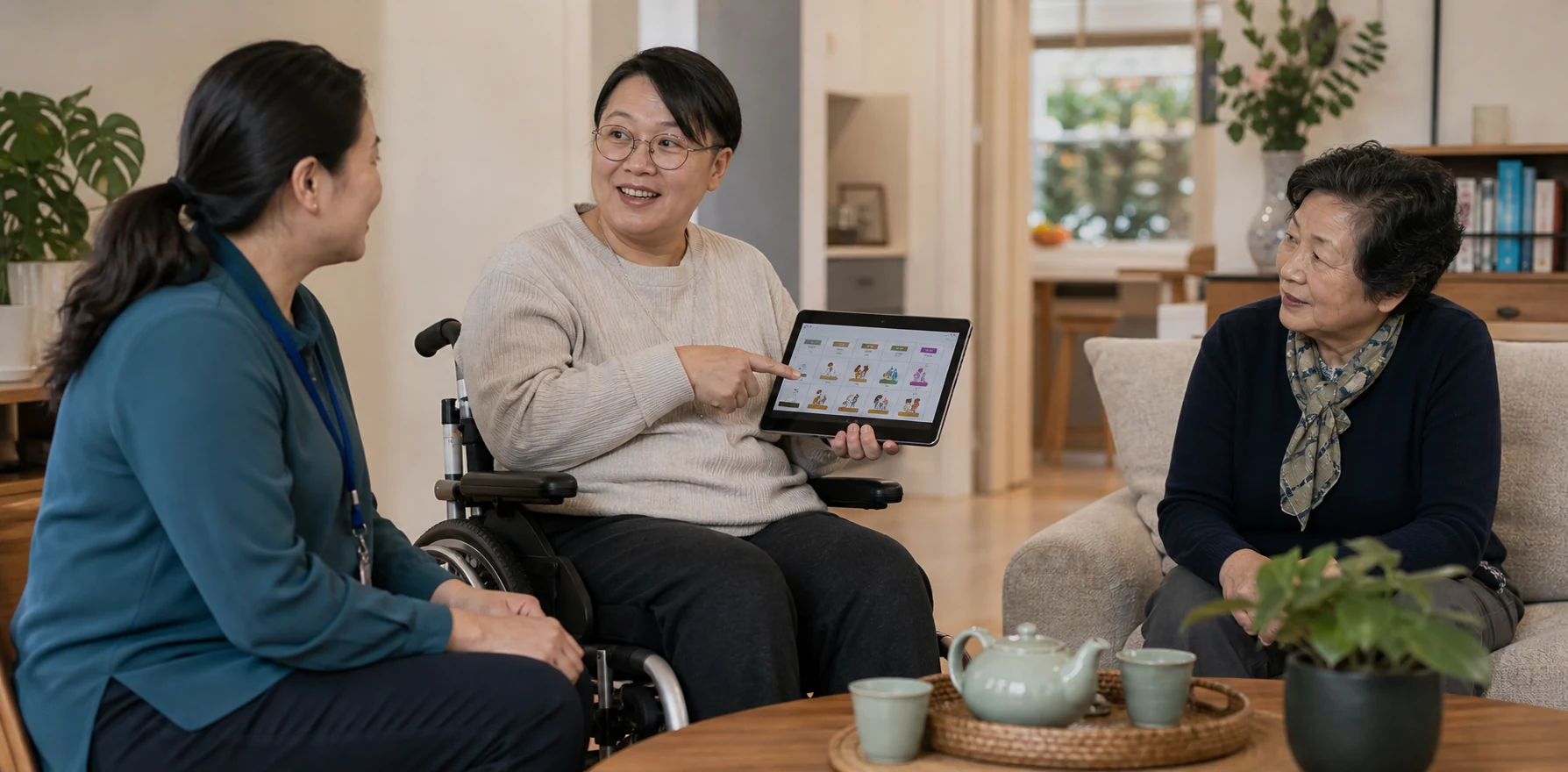
We discuss language, family involvement, identity and communication preferences rather than making assumptions. Families and other supporters are involved with the participant’s consent or lawful authority.
You do not need to choose the exact service before starting the conversation.